



At this time of year, my thoughts turn to my window dressings. It’s probably because the darker evenings mean closing the blinds is essential for privacy when we have our lights on indoors.
I’m hoping to change out my living room vertical blinds for something more cosy – I’m thinking layers of curtains, voiles and blinds to create a mid-century-inspired look to match the rest of my home.
If, like me, you’re planning to change your window dressings soon, here are some tips for styling, measuring and installing your dream window treatments…
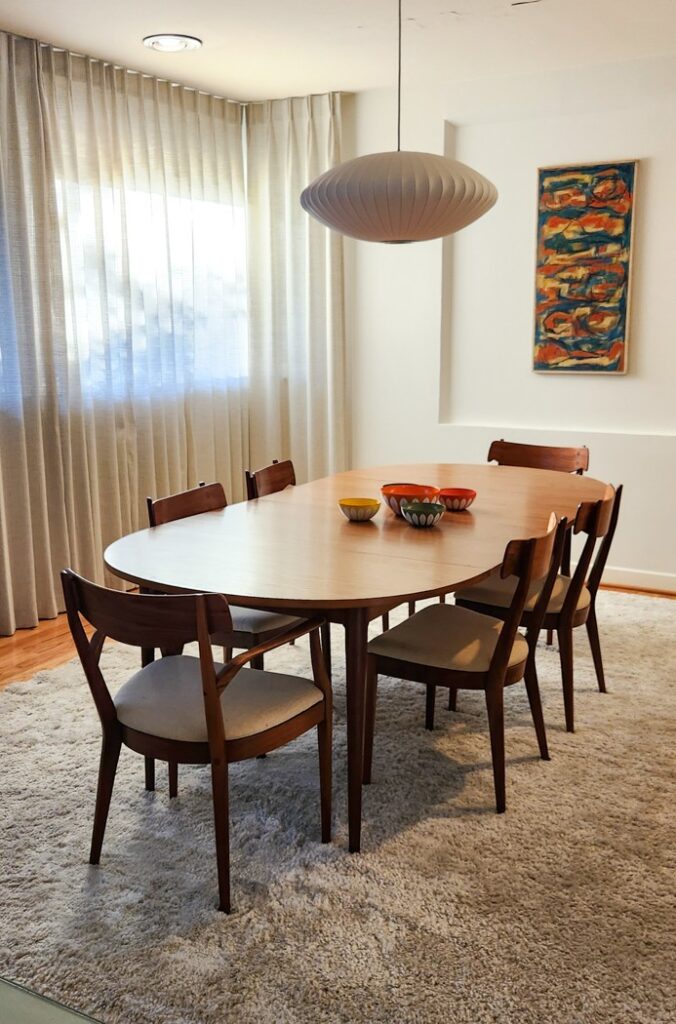
I’d love to have window dressings like this 1957 Mid-Century House
Styling your windows
During the winter, heavier curtains or fabric blinds with thermal linings can be crucial in helping to keep the warmth locked in and therefore keeping you cosy in the colder weather.
That said, it’ll soon be spring again and you’ll want to be able to welcome in the sunlight and bring a bright, airy feel to your rooms, so flexibility in your choice of window dressings is key; layering up with blinds, voiles and curtains to suit every occasion.
Roller blinds, Venetian blinds or DIY plantation shutters provide a better way to upgrade your window dressings in order to fully control the amount of light that comes into your room – whether that’s to create a cosy interior or a light-filled space.
Blinds can be drawn up completely to maximise the amount of natural light available during the day, while shutters can be carefully angled to minimise the sun’s glare while still allowing in the daylight or can be completely folded away, giving you the most control possible.
Plus, looking ahead to those summer mornings when the sun is shining through your bedroom window at far-too-early o’clock, it’s beneficial to be able to achieve a blackout effect with closed shutters or a thicker curtain layered over the blinds.
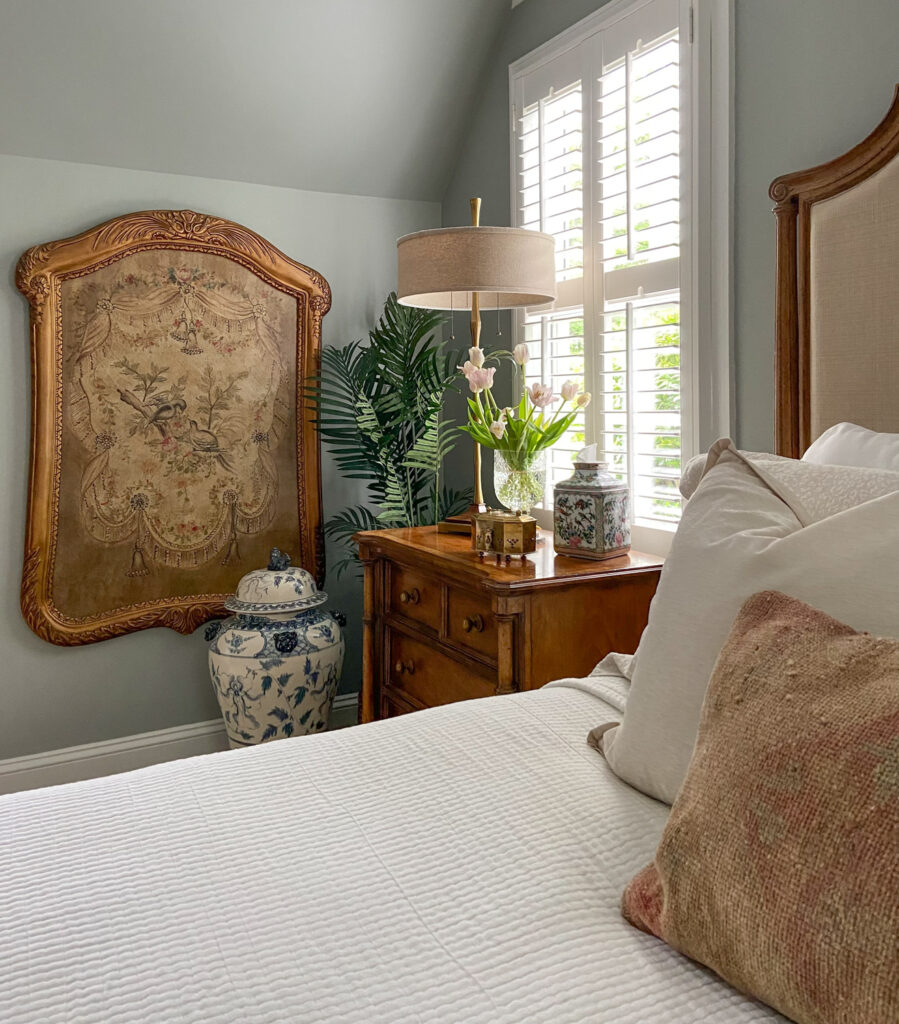
Gorgeous plantation shutters at Southern Charm Cottage
Measuring blinds
A way to save money on window dressings is to measure them yourself and have them custom-made, ready for you to install them yourself. This saves money on a professional coming out to measure up for you, and there will be no installation costs for a fitter.
Don’t worry – it’s not difficult to do this yourself!
There are two types of ways that blinds can be installed – ‘recess’ within the window aperture or ‘face-fix’ front-mounted on the wall. That means that there are also two ways of measuring up, depending on which style you prefer.
If you’re going for a recess blind, you’ll have to be thoroughly accurate with your measuring, as any mistakes will mean your blind won’t fit into the gap at all.
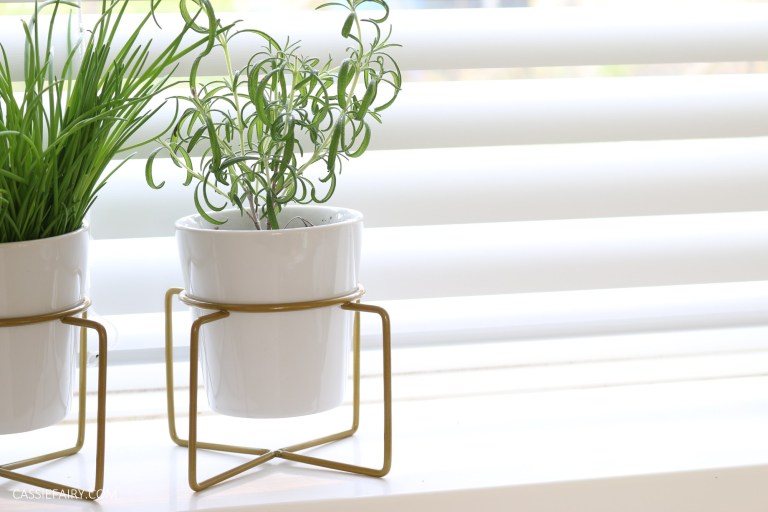
Plus, the recess of a window is sometimes a different width at the top than at the bottom. I found this out the hard way when I ordered a made-to-measure blind for my bathroom. I measured the gap at the top of the window but failed to measure the bottom, near the windowsill.
But at the base, on either side, is a small tile, which therefore makes the bottom of the window aperture smaller by about 1cm. It doesn’t sound like a lot, but it’s crucial when I ordered a blind that was 1cm too wide at the base, so it catches on the top of the tiles and can’t be unfurled all the way down to the sill!
So it’s essential to make sure you measure the gap across the top, in a few locations across the centre and again at the bottom. Take the smallest width measurement and order your blind to fit that measurement.
Similarly, measure the drop length at each side of the window and in the centre to make sure you order a blind that will fit perfectly when opened. Most manufacturers have their own measuring guidelines, so always check their advice for getting the perfect measurement.
If you find that your window aperture measurements are slightly different from the top to the bottom, this may result in space that’s not covered by the blind at either side, which can let more light in around the edges. So, if you want a blackout option, it’s probably best to go for a front-mounted blind. This can span over the edges of the recess, minimising light coming in the sides.
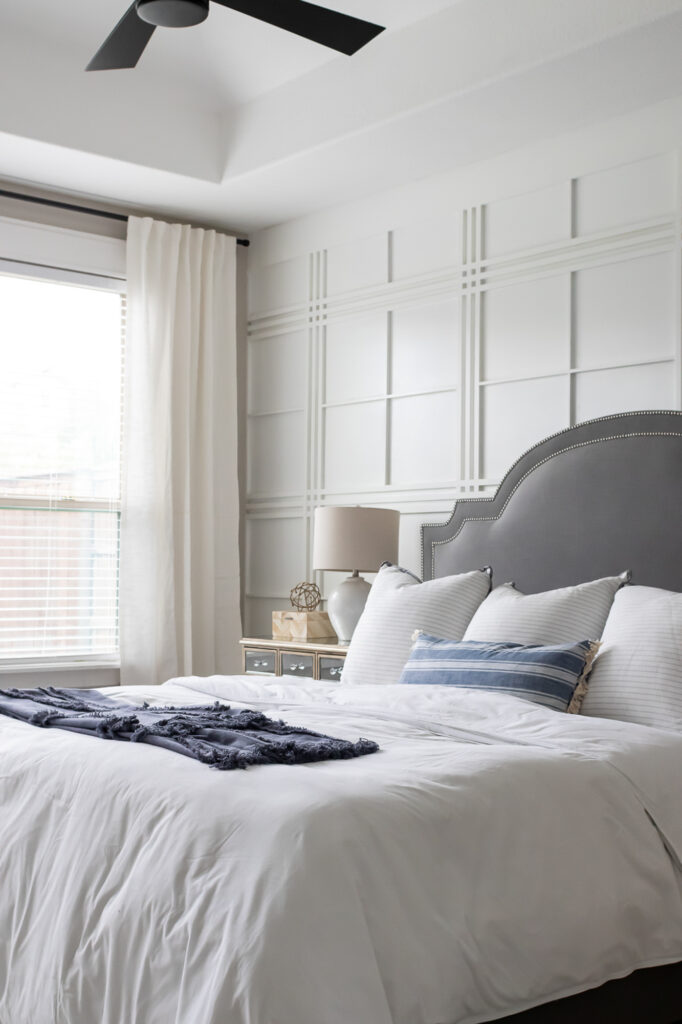
Layer recess blinds with full-length curtains like Simplicity for Design
Planning a DIY installation
A factor to consider is where you will attach your DIY blinds or curtain poles when you install them yourself. Many large windows will have sturdy lintels above them to support the wall, so it can be difficult to attach fixings to them.
Plantation shutters, however, can be fixed onto the window architrave or framing rather than the wall, so they’re considerably easier to install – wood is easier to drill into than concrete!
Likewise, if you’re installing curtain poles or tracks to layer up thermal drapes and sheer voiles, it’s important to fix them securely to the top of the wall (perhaps above the lintel) or even onto the ceiling.
This not only means the pole will be secure enough to hold heavy thermal-lined blackout curtains, but it also gives the visual impression of a much larger window when you hang curtains from ceiling to floor.
Plus, you’ll thoroughly black-out any daylight and keep the warmth locked in by going for a slightly larger curtain that covers the top, sides and bottom of the window.
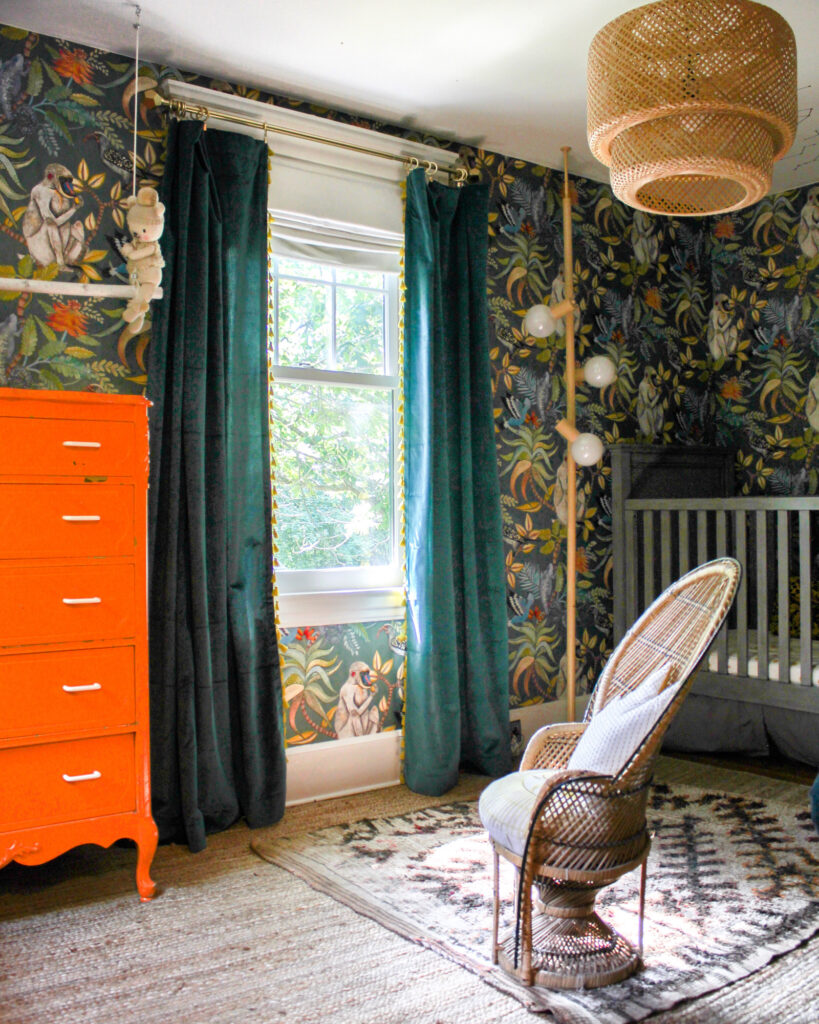
Cosy velvet curtains in Kate Pearce’s vintage home
I hope these tips will help you if you’re considering updating your window dressings soon. Please let me know how you managed to cut the cost of curtains, shutters or blinds in the comments below – I’d love to hear how you DIY’d your own interior.
Pin it for later
This article is a sponsored collaboration. The pink links in the content indicate a sponsored link or information source. The blog post reflects my own experience and the sponsor hasn’t had any control over my content 🙂